FOOD AND BEVERAGE
Alcoholic Beverages
World's Most Productive Companies

Alcoholic Beverage Producers: Cost Volatility and Changing Consumption
The Alcoholic Beverage Peer Group comprises large, global producers of beverage alcohol, encompassing beer, wine, and spirits portfolios. They operate capital-intensive brewing, distilling, and winemaking networks that rely on agricultural inputs such as barley, hops, agave, and grapes, as well as packaging materials like glass and aluminum. Cost movements in these inputs directly affect margins and pricing. Manufacturing involves brewing, fermenting, distilling, aging, blending, and bottling, with quality control across flavor, carbonation, and alcohol content.
Major market influences include shifting consumer trends toward premium and non-alcoholic beverages, macroeconomic pressures such as inflation, pandemic-driven consumption changes, supply chain disruptions, and accelerated digitalization in distribution and sales.
In 2024, companies faced economic pressures from inflation, a slowdown in premium segments due to post-pandemic normalization, and adjustments to inventory levels. This was alongside ongoing consumer shifts toward non-alcoholic options and RTDs, intensifying competition, and continued digital channel investment.

Top 100 World's Most Productive Companies - Alcoholic Beverages
Productivity Snapshot
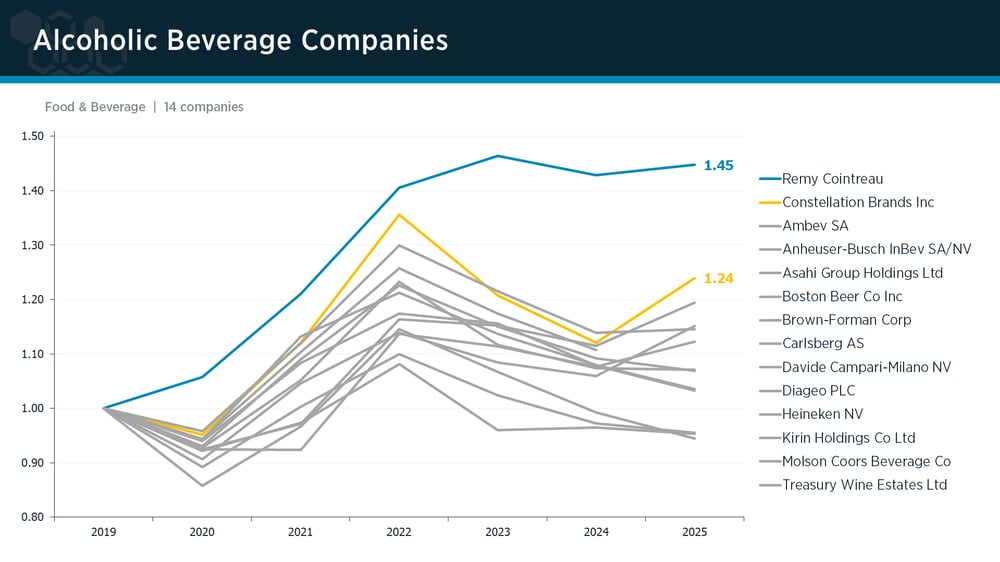
The Alcoholic Beverage Manufacturers experienced a similar productivity trendline to many other industries and peer groups: an improvement in productivity growth from 2020 to 2023, followed by a regression to declining productivity in 2023 and 2024. Their COVID surge was particularly strong for the alcohol manufacturers.
- Productivity in the sector has grown by an average of 8.6% over the last six years. This Peer Group had the second-best growth rate in Food and Beverage generally and performed slightly above the average for manufacturers represented in the IPI.
- The COVID-driven demand surge supported significant productivity growth from 2020 to 2022, at 69.3%.
- Like so many other industries and peer groups, these companies have regressed in the post-COVID years. Of the 5 companies, all had negative productivity growth in 2023 and 2024.
- 2024 Productivity declined an average of 19.3% across these companies.
- Remy Cointreau earned its position within the LNS 2025 World’s Most Productive Companies by growing productivity 69.6% over the last six years, more than EIGHT times the average of its peers/competitors. Remy’s leading productivity performance over the last six years is driven by the premiumization of the product line, distribution simplification, procurement discipline, and production cost control. In 2024, Remy drove significant improvements by optimizing container utilization, restructuring production processes and packaging, adjusting raw-materials procurement, and tightening manufacturing cycles
- Diageo PLC earned its position within the LNS 2025 World’s Most Productive Companies by growing productivity 17.7% over the last six years, more than 106.4% the average of the Peer Group. Diageo reports its leading productivity performance is built on three main levers: streamlining supply-chain operations, reducing overhead costs, and simplifying processes across the company. Specifically, they are reconfiguring their production and logistics networks for efficiency, automating and digitizing operations to reduce labor and distribution costs, and trimming corporate expenses to improve margins and enhance free cash flow despite inflation and weaker demand.